Same Reels, Two Wallets: 20,000 Spins to Find Out Whether Bet Size Touches RTP
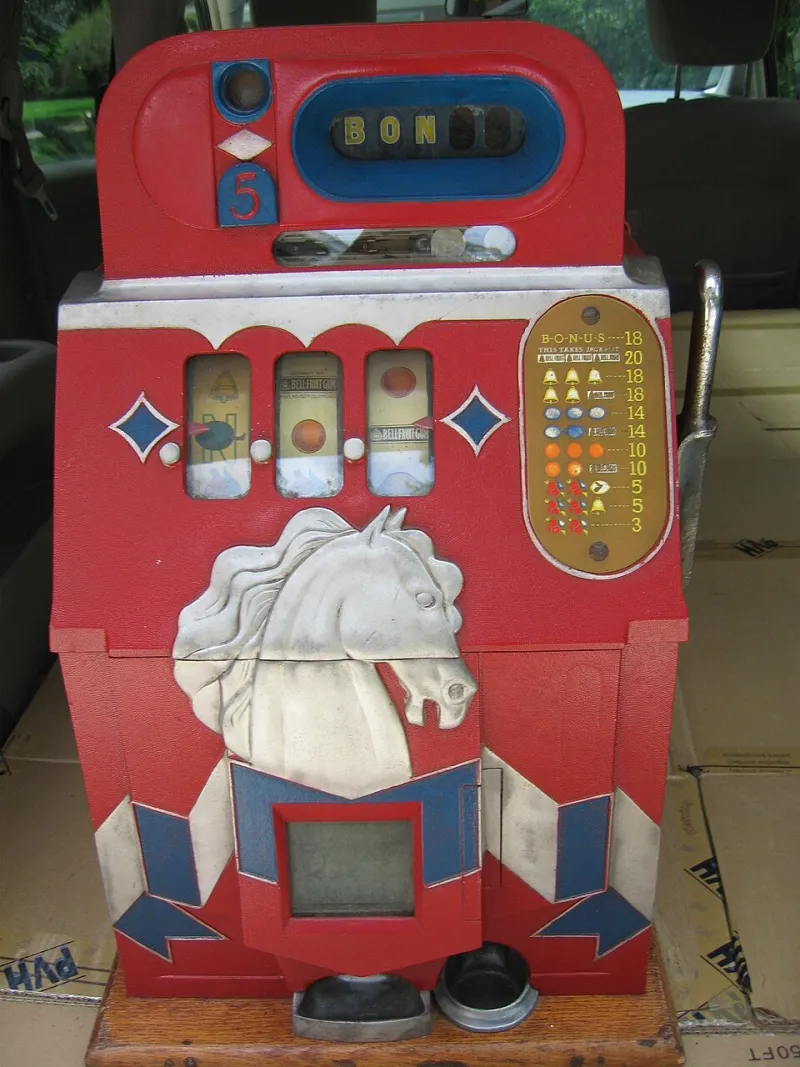
Photo: Gameroom Show, https://www.gameroomshow.com/faq/#Copyright, CC BY-SA 4.0, via Wikimedia Commons
There is a piece of slot folklore that refuses to die: the game knows how much you are betting, and it pays accordingly. Sometimes it arrives as a warning — never play minimum bet, you will never hit anything. Sometimes it arrives as a promise — max bet unlocks the real RTP. Either way, the story assumes the paytable cares how much is in your wallet.
We wanted to know if that holds up. So we took one game, two stakes, and 20,000 spins.
The Setup: One Game, Two Stakes
We picked a five-reel title that shows up in most US-facing lobbies — mid volatility, published RTP of 96.20%, a $0.20 floor, and a $100 ceiling on the bet slider. No max-bet-only bonus feature bolted on, no tiered paytable, nothing weird in the help screen. Same math model on both sides of the experiment.
Then we split the work: 10,000 spins at $1, and 10,000 spins at $100. That is $10,000 of handle on one side and $1,000,000 on the other. Every spin went into a log — bet, win, bonus trigger, dead-spin streak, timestamp. The low-stakes run took about six weeks of casual grinding. The high-stakes run took two evenings and a lot of deep breathing.
An Uncomfortable Caveat About Sample Size
Before the numbers, the honest part. RTP is a long-run average built over billions of spins. Ten thousand spins does not prove an RTP. It cannot.
Here is the arithmetic. A mid-volatility slot typically throws off a per-spin standard deviation of roughly five times your bet. Over 10,000 spins, that produces a standard error of about 5% of everything you wagered. In plain English: at $1 stakes, our final result could have drifted about $500 in either direction and still been completely ordinary. At $100 stakes, that same noise band is roughly $50,000.
So treat this as a behavior study, not a verdict. If two RTP figures differ by less than the noise band, you are looking at luck in a costume.
What Actually Happened
| Metric | $1 stake | $100 stake |
|---|---|---|
| Total wagered | $10,000 | $1,000,000 |
| Total returned | $9,610 | $957,900 |
| Realized return | 96.10% | 95.79% |
| Bonus triggers | 118 | 124 |
| Longest dead stretch | 611 spins | 688 spins |
| Biggest single spin | $388 (388x) | $28,500 (285x) |
| Session length | about 4 hours | about 1 hour 50 minutes |
Both figures land inside the noise band around the published 96.20%. The 0.31-point gap between them is a rounding error wearing a trench coat. Bonus frequency matched within about 6%, which is exactly the kind of spread you would expect from two random samples of this size.
Nothing in the log suggests the game paid better or worse because of the stake. Same reels, same scatter frequency, same everything — just more zeros behind the decimal point.
Where Bet Size Genuinely Does Something
It would be wrong to say stake is irrelevant. It just does not touch the payout percentage. What it does touch:
Dollar volatility. Your swings are the same shape in percentage terms and 100 times larger in cash terms. A session that feels like a gentle wave at $1 feels like a car crash at $100.
Bankroll survival. Three hundred dollars buys you 300 spins at the minimum and three spins up top. The math model does not change; your ability to sit through a dry spell does.
Jackpot eligibility. Plenty of progressives require the max bet to qualify. A slice of every wager feeds the pot, and the pot only opens for players at the ceiling. That is an eligibility rule, not a change in RTP.
Time per dollar. Same spin rate, dramatically different burn rate. Most players notice this one first.
The Exceptions Worth Knowing About
There is one real bet-level wrinkle in the modern market: a handful of studios publish different RTP tables for different bet tiers. A few operators also publish multiple RTP configurations for the same game — say 96%, 94%, and 92% — and pick one. That last one is a far bigger deal than bet size, and it is a site-level decision, not a stake-level one. Check the game info screen before you assume anything.
And a small number of legacy titles gate bonus features behind a max bet. Read the paytable. If a feature is capped at max bet, that is your answer, and it has nothing to do with RTP.
The Practical Read
Set your stake from your bankroll, not from a hunch. Divide your session budget by your bet to get your spin count, and aim for 200 to 300 spins so a normal cold streak does not end your night early. When you are losing, move down rather than up — the math does not owe you a comeback, and doubling your stake doubles the speed of the slide, not the odds of a rescue.
If you want the progressive, pay the max-bet toll and accept that most of your wagers are buying a lottery ticket. If you want the advertised RTP, read the game info screen instead of the bet slider.
The Short Version
- Stake does not change the published RTP on a single fixed paytable.
- Ten thousand spins cannot prove an RTP, and anyone who says otherwise is selling something.
- Higher stakes multiply variance in dollars, not in percentages.
- Jackpot eligibility and max-bet features are the only real stake-level differences.
- Verify RTP per game, per site — that is where the actual variation lives.
The reels do not know what you ate for breakfast, and they do not know what you staked. They just spin.