The 98% Trap: How Volatility Quietly Drains Bankrolls Faster Than RTP Ever Could

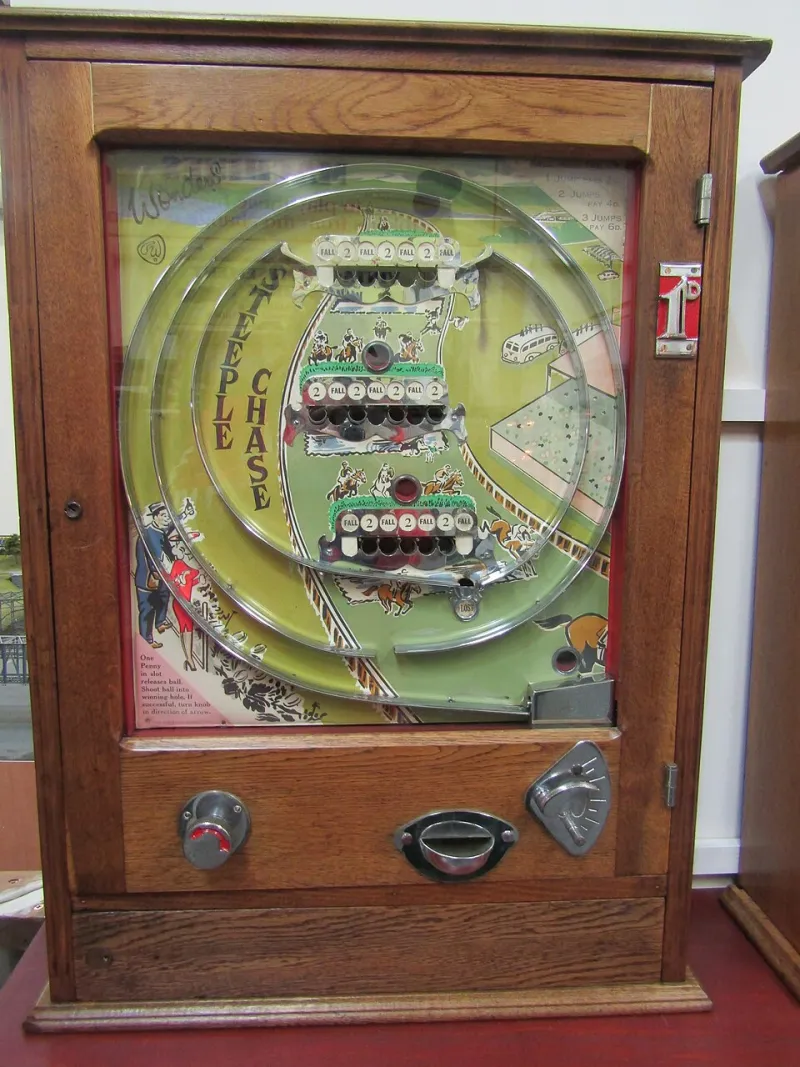
Photo: TaurusEmerald, CC BY-SA 4.0, via Wikimedia Commons
Two Numbers, One Misunderstanding
If you've spent any time on slots forums or YouTube, you've seen the advice: "Always play the highest RTP game." It sounds airtight. A 98% return beats a 94% return, right? Mathematically, over an infinite number of spins, yes. But here's the problem — you don't have an infinite bankroll, and you're not going to spin four million times this weekend.
That's where volatility enters the picture, and where most American players get burned. Let's untangle the two numbers that actually shape your session.
RTP: The Long-Game Statistic
Return to player is the percentage of all wagered money a slot pays back across its entire lifetime. A 96% RTP machine returns $96 for every $100 wagered — eventually, across millions of spins from thousands of players.
What RTP does not tell you: how that money gets distributed. It could come back as a steady trickle of small wins or as one jackpot buried under a desert of dead spins. Same RTP, wildly different experience. Which brings us to the other number.
Volatility: The Short-Game Reality
Volatility (sometimes called variance) describes the swing pattern of a slot:
- Low volatility — frequent small wins, rare dry spells, bankroll moves in gentle waves
- Medium volatility — a blend of smaller hits and occasional decent payouts
- High volatility — long stretches of nothing punctuated by big, irregular wins
Here's the counterintuitive part: high-volatility slots often advertise the highest RTPs. The game can afford to promise 97-98% back because only a fraction of players ever hit the big payouts that make the math work. Everyone else funds the curve.
The Bankroll Math Nobody Shows You
Let's run two players, each starting with $200 at $1 per spin.
Player A — 98% RTP, high volatility. High-variance games commonly have hit frequencies around 20-25%, meaning three out of four spins return nothing. Losing streaks of 15-20 spins are routine, not rare. A $200 bankroll at $1 spins can vanish in a 40-50 minute session if the bonus round never lands. The RTP is excellent — but our player never survives long enough to see it.
Player B — 94% RTP, low volatility. With hit frequencies often above 35-40%, wins land constantly, even if they're small. Same $200, same $1 spins, and Player B routinely plays two to three hours. More spins, more entertainment, more chances to catch a hot streak — even though the theoretical return is four points lower.
Over 500 spins, Player A wagers $500 and, per the math, "loses" only $10 on paper. But variance doesn't care about paper. Player B wagers $500 and concedes $30 on paper — yet ends the night with money still on the screen far more often. Short sessions are governed by volatility; RTP only shows up in the long run most players never reach.
Real-World Flavor
Think of it like the difference between a classic three-reel game — the kind your uncle plays at a Vegas bar top — and a modern high-variance video slot stacked with features. The bar top pays $5 constantly and keeps you seated all night. The feature-heavy monster eats $100 quietly, then hands someone else a $4,000 bonus. Both are "fair." Only one matches most recreational budgets.
A Decision Framework: Match the Slot to the Moment
Stop asking "what's the highest RTP?" and start asking "what am I trying to do tonight?"
Playing with a modest bankroll for entertainment? Go low-to-medium volatility. Prioritize session length and hit frequency over theoretical return. A 94% RTP you can actually play for three hours beats a 98% RTP that's gone in forty minutes.
Chasing a big score with money you can afford to lose? High volatility is your lane — but cut your bet size in half or more to buy enough spins to reach the bonus rounds where those games pay out.
Clearing a bonus with wagering requirements? Low volatility again. Frequent small wins keep your balance alive while you grind through the playthrough.
Short session, fixed budget, no chasing? Medium volatility offers the best compromise — regular action with real upside.
The Pillar Takeaway
RTP tells you what a slot pays back to everyone, over forever. Volatility tells you what's likely to happen to you, tonight. At RTP Pilar 168, we publish both numbers on every game review for exactly this reason — because the smartest bet isn't the one with the best stat on paper. It's the one that matches your budget, your patience, and your reason for sitting down in the first place.
Check the RTP. Respect the volatility. Then spin accordingly.