Floor Plans for Feature Rounds: Where the Payouts Actually Live in Five Multi-Stage Bonuses
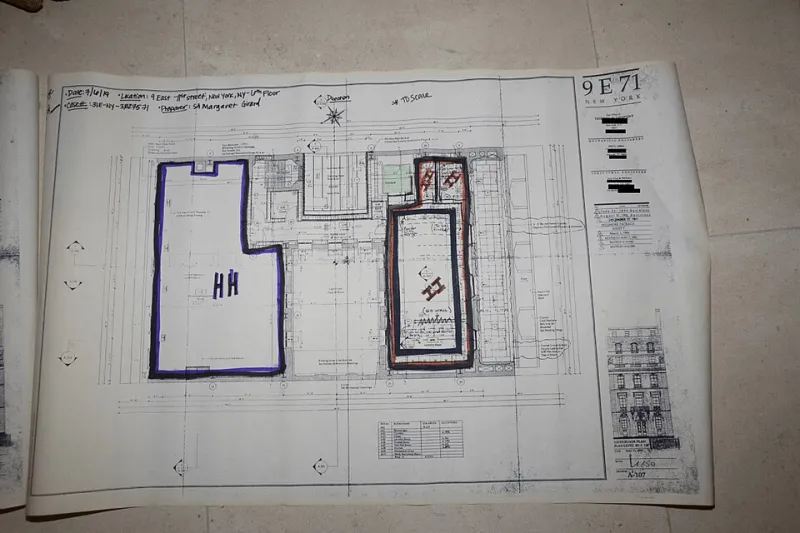
Photo: Federal Bureau of Investigation, Public domain, via Wikimedia Commons
Here at RTP Pilar 168, we think about slot features the way an architect thinks about a house: every room has a purpose, every hallway leads somewhere, and — this is the important part — some rooms are a lot more valuable per square foot than others. A bonus round isn't magic. It's a structure. And if you can read the blueprint, you can stop paying rent on rooms that were never designed to pay you back.
So today we're doing something a little different. We grabbed five popular multi-stage bonus mechanics, put on the hard hats, and mapped them out like floor plans. For each one, we'll show you the entry cost, where the expected value actually concentrates, and the design tricks that funnel players into dead-end rooms.
Why 'Multi-Stage' Changes the Math
A single-tier free spins round is a studio apartment — small, simple, easy to price. Multi-stage features are more like a split-level: the value isn't distributed evenly across floors. Designers front-load the excitement and back-load the value (or sometimes the reverse), which means the stage you're standing in matters far more than the stage you're hoping to reach.
Keep that in mind as we walk through the plans.
Floor Plan 1: The Free Spins Ladder
The structure: A base bonus awards free spins, but collecting a certain symbol — coins, lamps, whatever the theme demands — upgrades you to the next tier: more spins, bigger multipliers, sometimes both.
Where the value lives: Almost always on the top two floors. The bottom tiers exist mostly to keep the lights on. When we've tracked feature-buy outcomes on ladder-style games, the majority of total RTP inside the bonus concentrates in the top upgrade level, which most players reach only a minority of the time.
The dead-end room: The 'almost upgraded' tier. It pays slightly better than the base award but nowhere near enough to justify the emotional weight it carries. It's the architect's equivalent of a closet labeled 'office.'
Practical read: If you're buying this feature, you're really buying a lottery ticket on reaching the penthouse. Price it that way in your head.
Floor Plan 2: Expanding Wilds with Retriggers
The structure: Free spins where wild symbols expand to fill reels, and landing more wilds retriggers additional spins. The classic American-land-casino version of this is everywhere — it's one of the most copied blueprints in the industry.
Where the value lives: In the overlap. One expanded wild is a decent night. Two on adjacent reels is where the payout curve turns vertical. The EV isn't spread across the feature — it's compressed into rare spins where multiple wilds land together.
The dead-end room: Sessions where a single wild lands early, triggers one retrigger, then goes quiet. It feels like the feature is working, but the math says you're standing in a foyer with no doors.
Practical read: The variance here is brutal. This floor plan rewards short, lucky visits and punishes long tenancy.
Floor Plan 3: Hold-and-Win Respins
The structure: Land a set of bonus symbols, they stick in place, and you get respins to collect more. Fill the whole grid and you unlock a grand prize. This is the mechanic that took over lobbies in the late 2010s, and it hasn't left.
Where the value lives: Two places — the near-full grid (where each new symbol carries outsized value) and the jackpot tier, if the game has one. The middle of the round, where you've collected six or seven symbols and the respins keep resetting, is where most of the entertainment budget gets spent.
The dead-end room: The 'reset at one symbol' trap. Many players don't realize that in most hold-and-win builds, a single new symbol resets your respin counter. That's not generosity — it's the architecture keeping you in the building longer while your per-spin value quietly shrinks.
Practical read: Check whether the fixed jackpots scale with your bet or are flat. Flat jackpots on high denominations change the whole blueprint.
Floor Plan 4: The Pick-and-Click Maze
The structure: Trigger the bonus, get presented with a grid of objects — chests, safes, oysters, take your pick — and click to reveal cash prizes, multipliers, or a 'collect' that ends the round.
Where the value lives: In the pre-determined outcome. Here's the blueprint secret: in most modern implementations, your picks are theater. The result is decided by the RNG the moment the feature triggers, and the game simply arranges the reveal to match. Your 'choices' are load-bearing decorations.
The dead-end room: The entire room, honestly. But it's a cheap dead end — these features usually carry solid RTP because they're short. You're paying for a quick hit, not a tour.
Practical read: Don't agonize over picks. There's no optimal path because there's no path at all.
Floor Plan 5: The Multi-Stage Chase (Level Progression Features)
The structure: The most ambitious blueprint. Base game contributions fill a meter; the bonus advances you through distinct stages, each with its own rules — stage one might be sticky wilds, stage two multipliers, stage three a progressive finale.
Where the value lives: In persistence. These features are designed around the idea that you'll come back — the meter remembers you. That's genuinely player-friendly if the game's overall RTP is transparent, because your meter progress is real money sitting in a room the casino can't take back.
The dead-end room: Games that let the meter decay or expire. Some builds quietly drain unfilled progress if you don't return within a window. That's not a room — that's a trapdoor.
Practical read: Before committing to one of these, find the game info page and confirm whether meter progress persists indefinitely. If the answer isn't clearly documented, treat the whole building as suspect.
Reading Blueprints Before You Buy In
Feature buys have exploded in US-facing online lobbies, and the pricing on them is all over the map — sometimes 50x the base bet, sometimes 100x, sometimes priced with a premium that quietly lowers the effective RTP of the purchase itself. The single most useful habit you can build is this: before you buy any feature, open the paytable, figure out which stage or tier carries the value, and ask yourself how often that tier realistically gets reached.
If the penthouse pays 500x and it's reached one time in thirty, you're not buying a bonus round. You're buying a view of one.
That's the whole point of reading the floor plan. The building doesn't change. But knowing which rooms have furniture in them — that changes everything about how you walk through it.