Load-Bearing or Laminate? We Graded 10 'Certified RTP' Seals on US Casino Sites
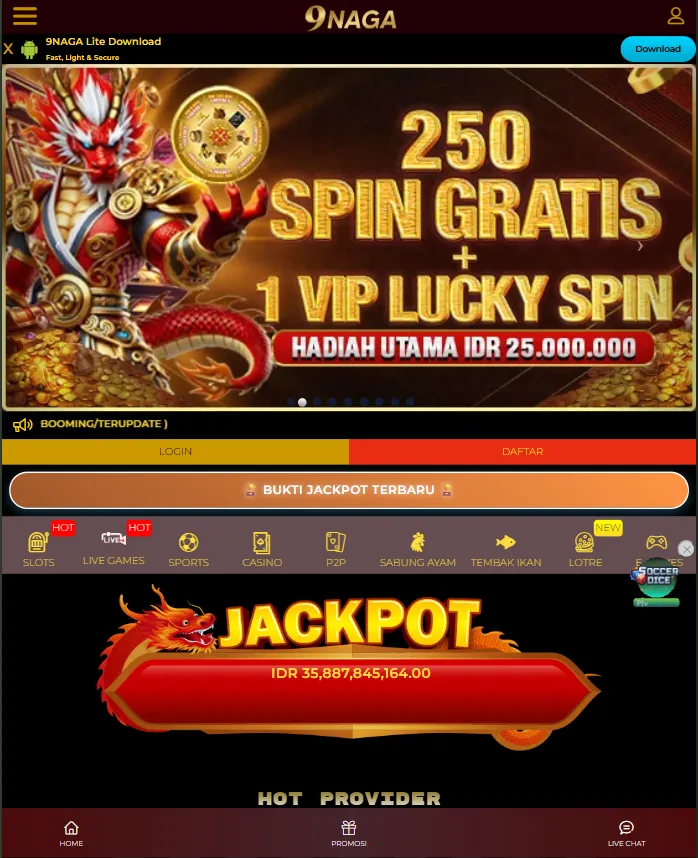
Photo: 9naga slot, CC BY 4.0, via Wikimedia Commons
Scroll to the bottom of any US-facing casino lobby and you will find the seal wall: a tidy row of little badges, most of them circular, most of them blue, all of them implying that somebody official has checked the math. At RTP Pilar 168 we spend a lot of time on foundations, so we did what an inspector does. We tapped on every one of them to see which were load-bearing.
Ten badges, ten grades, one rubric.
The Rubric: Four Questions
A certification is only worth what you can verify. Every badge got scored on four things:
- Who signed it? A named, independent testing lab, a named regulator, or a vague phrase like independent third party.
- Can I see the certificate? A clickable link to a real document with a date and a reference number.
- What does it cover? This specific game's math model, the RNG, the whole site, or nothing in particular.
- Is it current? Dated, renewed, and tied to an active license — or a graphic from 2019.
Grades ran A to F. Here is what we found.
The Ten, Graded
1. Named lab seal with a working certificate link — A-minus. Clicking the badge opened a PDF with the lab's name, the operator's name, a date, a certificate number, and a list of certified game families. It did not cover every title in the lobby, which is why it lost a fraction of a point. Still the gold standard on this list.
2. State regulator license seal with a verifiable license number — A. The strongest badge we found was also the least flashy: a state gaming authority logo with a license number you can look up in the regulator's public database in about thirty seconds. No marketing language, no claims about RTP, just proof the operator answers to somebody with subpoena power.
3. Lab seal, certificate undated or expired — C-plus. Real lab, real logo, and a certificate that had quietly aged out. This is the most common failure mode in the entire industry. A four-year-old audit is a snapshot of a company that may not exist in its current form.
4. Audited by an independent third party, with no party named — D. You cannot verify an unnamed auditor. The phrase carries exactly as much weight as the word premium on a cereal box.
5. Borrowed RNG certification logo — D-plus. The badge was genuine, but it certified the random number generator, not the paytable. Players read it as a payout guarantee. It is not one, and the site knows it.
6. Provably fair badge on a standard server-based slot — F. Provably fair is a real and useful concept for blockchain games where you can check hashes yourself. On a conventional slot, it is a word with no mechanism behind it. We found it applied to titles with no chain, no hashes, and no way to audit anything.
7. PCI DSS compliant seal used as payout proof — F. This certifies that card payments are handled securely. It says nothing about whether a slot pays 96% or 88%. It is a locksmith's certificate hung above a poker table.
8. Review-site star rating styled as a certification — F. A 4.8 average from anonymous users is not an audit. When the badge was restyled to look like a regulator's seal, we graded it as decorative and slightly dishonest.
9. Internal RTP verification, in-house — D-minus. A casino grading its own math is not nothing, but it is a company confirming its own homework. No lab, no certificate, no external signature.
10. Trade association membership badge — C-minus. Legitimate organizations exist and membership means something for dispute resolution and industry standards. It does not certify RTP, and it should not sit in the same row as badges that do.
What a Load-Bearing Badge Looks Like
When one of these is genuinely structural, it tends to include the same five things: a named independent lab (the names you will see repeatedly are GLI, BMM, eCOGRA, iTech Labs, TST, NMi, and QUINEL); a certificate number; a date; a stated scope; and a list of which games or game families are covered. Anything with a lab logo and a mouse pointer that turns into a hand when you hover over it is starting from a good place.
The Ninety-Second Check
You do not need a spreadsheet. Here is the routine we use on any unfamiliar site:
- Click the badge. If it goes nowhere, it is a sticker.
- Search the lab's published client or certificate list for the operator's name.
- Open the game itself, find the info or help screen, and read the RTP number printed there.
- Compare that number to the one on the marketing page. If the lobby promises 97% and the game screen says 94%, believe the game screen every time.
That last step is the whole ballgame. The certificate proves somebody checked the math at some point. The game info screen tells you what the math actually is right now.
Why This Is a Specifically American Problem
The US market is a patchwork of state regulators, each with its own testing requirements, plus a large offshore segment that answers to nobody in particular. A player in New Jersey is standing on genuinely thick concrete: licensed operators, published lab reports, a regulator with a complaint line. A player on an unlicensed site has a row of graphics and a live chat window. The badges look identical. The foundations are not remotely the same.
That is the recurring theme in our casino safety coverage, and it is worth repeating: the seal is not the structure. It is a sign bolted to the front of it. Look past the sign, find out who poured the concrete, and check the number yourself.
The Verdict
Of the ten badges we graded, two were load-bearing, three were partially structural, and five were laminate. That ratio is roughly what we expected and roughly what you should expect too. A real certification is boring, linkable, dated, and specific. Everything else is decoration — and decoration does not hold up a building.